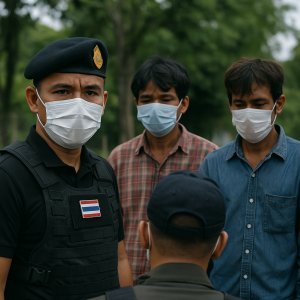

Cambodian Labors in Thailand: Economic Role and Impact from Border Tensio
The escalating tension along the Thai-Cambodian border has begun to ripple across key sectors of Thailand’s economy—particularly tourism and labor-intensive industries. While the government has assured the public and international partners that conflict areas are not in major tourist zones, the psychological and operational effects are already being felt.
The Vital Role of Cambodian Labors
Cambodian labors form a significant part of Thailand’s migrant workforce. Over 500,000 Cambodian workers are legally employed in the country, contributing substantially to agriculture, livestock, construction, and tourism support services. An estimated 200,000–300,000 more are working informally.
In provinces like Chanthaburi and Trat, Cambodian workers play a key role in seasonal fruit harvesting and livestock processing. Their sudden return to Cambodia due to security concerns has raised alarms, particularly among durian farmers and poultry exporters.
Industry-Specific Impacts
- Agriculture: A shortage of fruit pickers threatens to reduce the harvest volume, especially for longan and durian. Producers may face significant financial losses in the upcoming season.
- Livestock: Reports indicate mass resignations from slaughterhouses and food-processing facilities in Eastern Thailand, with tens of thousands of workers leaving.
- Tourism: Over 8,000 international travelers have canceled trips to Thailand, affecting hotel bookings in Eastern provinces by as much as 20%.
- Construction: While Cambodian workers are common in this sector, major contractors report minimal impact—most laborers are continuing work, albeit cautiously.
Replacement Strategies and Adaptation
Despite the partial exodus of Cambodian labors, employers remain cautiously optimistic. Thailand hosts over 2.9 million Myanmar workers, many of whom can substitute for Cambodians in several sectors. However, differences in job preference and legal documentation must be addressed.
Some companies are now considering:
- Hiring Laotian workers as an alternative
- Investing in automation and machinery for production efficiency
- Consulting with services for obtaining work permits for foreign employees to remain compliant
For businesses looking to adapt, we recommend:
- 👉 Explore legal assistance for foreign labor and immigration compliance
- 👉 Get professional support for payroll, accounting, and tax planning for migrant labor-intensive businesses
Conclusion
Cambodian labors are vital to Thailand’s workforce, particularly in agriculture and food production. Although the recent conflict has caused temporary disruptions, the availability of substitute workers and technological solutions provides a buffer. Still, long-term resolution through peaceful diplomacy will best ensure stability, investor confidence, and workforce continuity across the region.